Braces vs. Clear Aligners: Choosing the Right Fit
Braces and clear aligners can both produce excellent orthodontic results, but they use different systems to move teeth. The best option depends on the type of tooth movement needed, the complexity of the bite, and the patient’s ability to follow treatment instructions.
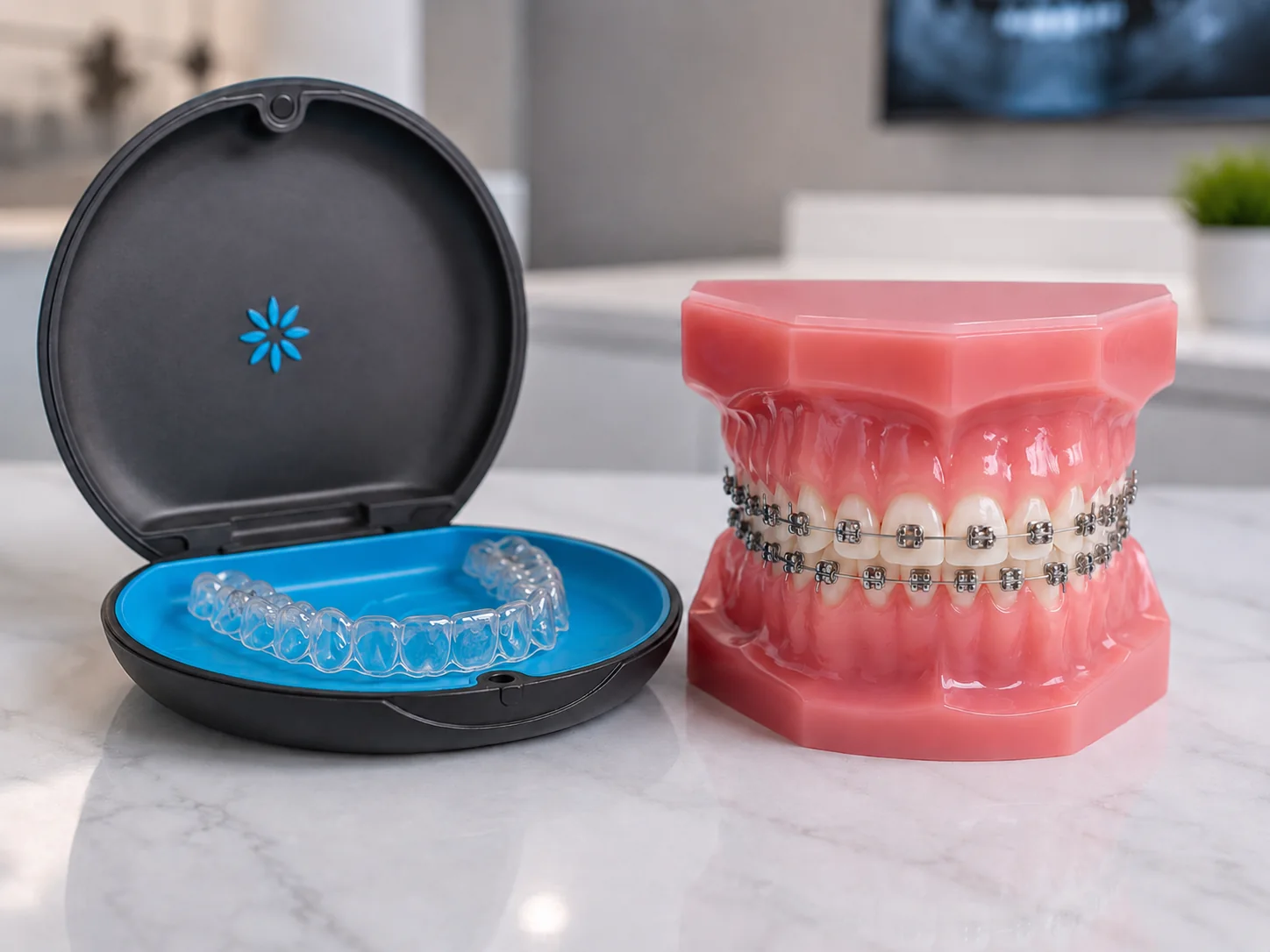
Traditional braces are fixed to the teeth, which means they are working continuously. Because brackets and wires are not removable, braces allow the orthodontist to maintain consistent control over tooth movement. They are often especially effective for more complex corrections, including significant crowding, rotations, vertical tooth movements, bite correction, and cases that require precise finishing.
Clear aligners are removable, low-profile appliances that gradually move teeth through a series of custom trays. They can be an excellent option for many teens and adults, particularly when esthetics, comfort, and convenience are important priorities. Aligners can also make brushing and flossing easier because they are removed for eating and oral hygiene.
The most important factor with aligners is compliance. For aligners to work predictably, they generally need to be worn 20–22 hours per day, or as instructed by the orthodontist. If aligners are frequently removed for snacks, sports, or busy schedules, tooth movement may not track as planned, which can extend treatment time or require additional refinements.
With braces, the main responsibilities are oral hygiene and avoiding foods that can damage the appliances. Sticky, hard, or crunchy foods can loosen brackets or bend wires. Thorough brushing and flossing are also essential because plaque accumulation around brackets can increase the risk of gingival inflammation, decalcification, and white spot lesions. We will show you exactly how to keep your teeth clean throughout treatment.
Comfort is different with each system. Both braces and aligners involve an adjustment period as the teeth begin to move. Braces may cause temporary soreness after adjustments and can occasionally irritate the cheeks or lips. Aligners often feel tight when a new tray is started and may create pressure on specific teeth. In either case, discomfort is usually temporary and manageable.
So which option is better? The answer depends on your bite, your goals, the movements required, and your lifestyle. At your consultation, we will evaluate your teeth, bite, smile, and treatment priorities. Then we will explain your options and recommend the approach that gives you the most predictable, healthy, and stable long-term result—not just the fastest or most convenient one.